While researching her 2023 book Now You See Me: An Introduction to 100 Years of Black Design, Charlene Prempeh – founder of creative studio and art consultancy A Vibe Called Tech – became more aware of how little institutional support or recognition Black designers had received. “I found myself imagining what a survey of contemporary Black design might look like and the Design Museum seemed a natural place to begin that conversation,” she tells Anima. The resulting exhibition, The Nue Black Aesthetic, which opened on 6 November and runs until 8 August 2027, brings together more than 100 objects by Taiba Akhuetie, Ini Archibong, Tejumola Butler Adenuga, Simone Brewster, Mac Collins, Foday Dumbuya, Feben, Phoebe Collings-James, Andu Masebo, Nifemi Marcus-Bello, Giles Tettey Nartey, Saul Nash, Tosin Oshinowo, Samuel Ross, Bianca Saunders and Rachel Scott.
The exhibition’s title looks back to two earlier moments. The Black Aesthetic grew out of the Black Arts Movement of the 1960s, when the writer and poet Larry Neal argued that Black art should be rooted in African American culture and inseparable from politics. In his 1968 essay, The Black Arts Movement, published in the Summer 1968 issue of The Drama Review, he wrote that the movement “believes that your ethics and your aesthetics are one”. The New Black Aesthetic was the name that the filmmaker and novelist Trey Ellis used in a 1989 essay to an aesthetic that, he wrote, “shamelessly borrows and reassembles across both race and class lines”. Both arguments were drawn from particular moments in Black American cultural history. In the introduction to the exhibition’s accompanying book, Prempeh considers how the experiences of the wider diaspora have since complicated those earlier definitions. ‘Nue’, from the Middle French nuer, meaning to make shades of colour, is her way of reconciling the growing specificity of Black experience across the world with the shared perspectives and practices of Black identity. She describes contemporary Black design as “polyphonic in nature”. She adds, "Essentially, this is my lens of what I think the Black aesthetic is today.”

That thinking has shaped the selection of designers exhibited, as well as the exhibition structure, which is split into six sections: a historical introduction, three thematic sections, a film and a final commission. The first, Towards a Nue Black Aesthetic, traces seven decades of Black design. The next three – Identity as Inspiration, Community Building and Rethinking the System – explore the ways designers draw on personal histories, create a sense of belonging and challenge established design conventions. The penultimate section presents a film by Samona Olanipekun, while the finale is devoted to a new work by Ini Archibong.
“Curation is in essence the act of selecting and organising,” says Prempeh. “There are tens and tens of other black designers whose work I both respect and enjoy who aren't in this exhibition and that's because I was looking for shared themes. There was obviously also a focus on UK designers or designers who have a significant connection to the UK so that was a significant filter as well. Making decisions came down to asking: what are the key themes that these designers can fall under, themes that make sense to visitors and that can help tell a compelling story about Black design today. I built the narrative around three interconnected ideas: identity as a source of inspiration, design as a means of building community, and the impulse to challenge established systems.”

In Identity as Inspiration, Taiba Akhuetie’s Braided Rocking Chair takes the familiar form of a domestic chair and envelops it in synthetic hair, its thick braids turning the frame into something tactile and almost animate. Akhuetie, a British-Nigerian artist, works with hair as both a material and cultural language. Growing up in the UK amongst beauty standards that privileged European features, she saw Black hair being treated as something to be managed or controlled. Her furniture instead draws on the social rituals of hairstyling, recasting them as acts of connection and creativity. The section also includes Bianca Saunders’ suit for Usher’s appearance at the 2023 Met Gala, a piece that challenges hypermasculine conventions in menswear. Elsewhere in the exhibition, Feben’s Armour dress from her Spring/Summer 2024 Temple collection and Rachel Scott’s garments for Diotima’s Fall 2026 collection – made in collaboration with the estate of Cuban artist Wifredo Lam – extend the conversation between fashion and identity.


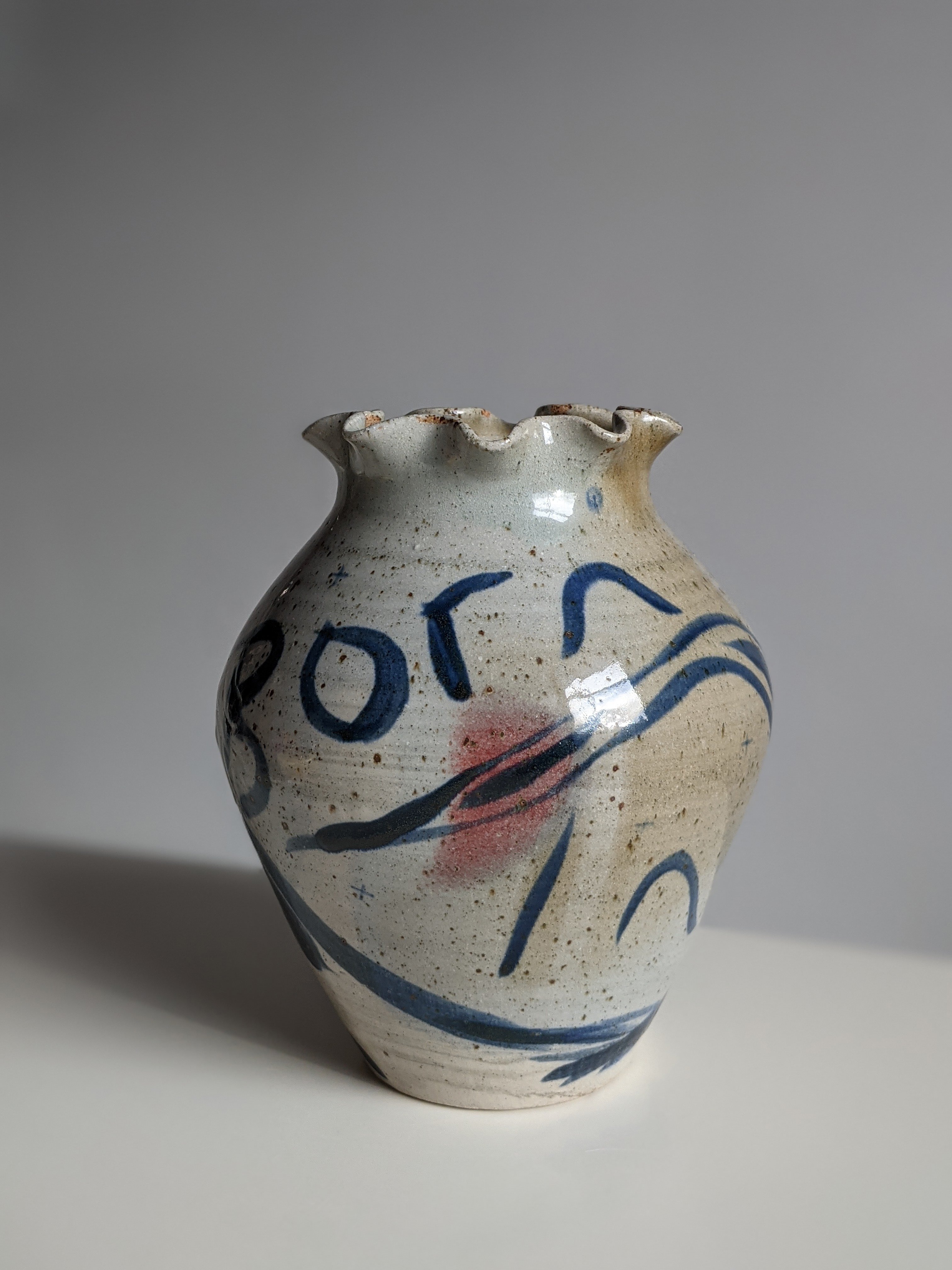
The exhibition’s Community Building section considers design as a way of bringing people together. Its central example is LABRUM’s high-fashion reimagining of the Arsenal 2024/25 away kit, designed by Foday Dumbuya in collaboration with adidas. Its black, red and green colour scheme draws on Pan-Africanism, and the kit resonated with Arsenal supporters across the African diaspora. The section also explores how objects can create spaces for social exchange. Andu Masebo’s Around Table is a table made from curved wooden segments, accompanied by stools, that can be reconfigured for different gatherings. Mac Collins’ Open Code, meanwhile, takes the form of a black dominoes table complete with stools and playing pieces. Rooted in a game with significance in Jamaican culture, the work was originally commissioned for the 2022 Harewood Biennial, where its presence brought a familiar social ritual into a historic interior shaped by the wealth of the transatlantic slave trade. Phoebe Collings-James’ ceramics also speak to this relationship between making and community – their studio, Mudbelly Ceramics, offers free courses for Black people, taught by Black people.


In Rethinking the System, Giles Tettey Nartey’s Strange Notes is a contemporary interpretation of the West African balafon, a type of xylophone. Made from steel and ceramic, the work is part of Nartey’s wider practice that challenges a Western design canon that has too often treated traditional West African design as frozen in time, rather than recognising its capacity to evolve. Elsewhere in the exhibition, Nifemi Marcus-Bello’s Oríkì (Act III): Whispers of a Trail brings together sculptural forms in copper. The Lagos-based designer’s exploration of the material considers the distance between the resources found on the African continent and the value they acquire elsewhere.

For Prempeh, the exhibition also needed to look beyond the contemporary moment. “What became clear in the process is that the multidisciplinary approach needed to be rooted in historical context,” she explains. The opening section, Towards a Nue Black Aesthetic, traces Black design from the 1950s to the present, bringing together work and graphics by more than 20 additional designers. These include architect Paul Revere Williams, who contributed to the design of LAX; textile designer Althea McNish, known for her work with Liberty; Francis Kéré, the first Black architect to win the Pritzker Prize in 2022; and Magdalene Odundo, whose work Prempeh describes as having platformed Gbari potters of Abuja. Prempeh also says the section wasn’t originally meant to be part of the show – “We’ve been really pleased by how people are responding to it.”


The penultimate section is Black by Design, presents a new film by Samona Olanipekun, following the designers through studio visits and interviews as they discuss their personal journeys and motivations. The exhibition then concludes with Mfon, a new site-specific commission by Nigerian American designer Ini Archibong. Made from hand-blown Murano glass, the large chandelier takes its name from the Ibibio word for “grace”, a language spoken in Nigeria, and is accompanied by an ambient soundtrack. Prempeh loves the way it closes the show “by carving out this kind of meditative space”.
“My hope is the exhibition signals a new chapter in the conversation around the Black aesthetic – one in which nuance and multiplicity takes precedence,” Prempeh says. “I want visitors to leave with curiosity. If they leave with a curiosity about Black design then I’ve more than achieved my goal.”
The Nue Black Aesthetic is running until 8 August 2027 at Design Museum, London